cn
×
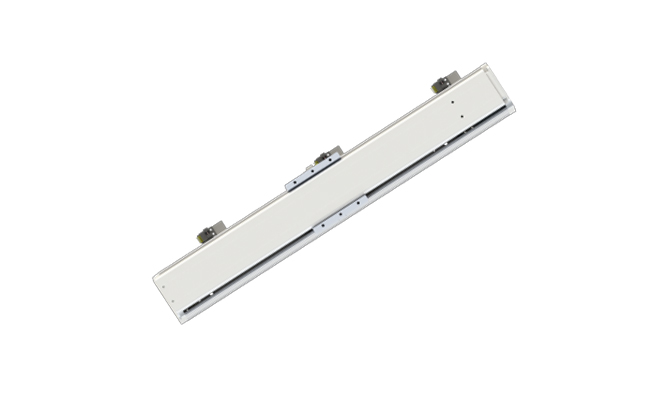
HSDI350 Rotor with Frame
The current position:Home > Products > HSDI350 Rotor with Frame
HSDI350 Rotor with Frame
Low Speed, High Torsion and High Precision
Consulting
Product introduction
Overview
Features
Performance parameters
Application
Torque motor has the characteristics of low speed and high torque. AC torque motor is often used in textile industry. Its working principle and structure are the same as single-phase asynchronous motor.
Torque motors are mainly used in the following aspects
I. Winding:

Winding is a very important process in wire and cable, textile, metal processing and paper making. product
When winding, the diameter of the drum increases gradually. It is very important to keep the tension of the coiled product unchanged throughout the process because of the tension.
Over-assembly will narrow or even break the wire diameter, or cause uneven thickness of the product, and too small tension can cause winding.
Relaxation. In order to keep the tension constant during winding, the drum must be driven when the diameter of the product winding on the coil increases.
The output torque of the motor is also increased. In order to keep the linear speed of the winding product unchanged, the rotational speed of the winding disc must be reduced accordingly.
The mechanical characteristics of the moment motor can exactly meet this requirement.
II. Stepless Speed Regulation

The mechanical characteristics of the torque motor are very soft. When the load increases, the speed of the motor decreases, the output torque increases, and the transmission occurs.
The output torque is proportional to the square of the voltage. If the load is fixed, the speed of the motor varies with the voltage, so that the speed of the motor varies with the voltage.
On a device with constant load, any speed can be obtained by changing the input voltage of the motor through a voltage device. however
Torque motor operates at low speed, and its efficiency is extremely low, which is not conducive to long-term low-speed operation.

3. Unwinding (Constant Power Characteristic of Braking)
Unwinding is also called loosening, unwinding and wiring. In industrial production, it is sometimes necessary to convey products wound on drums.
Go to the next step. In the process of conveying, a tension opposite to the direction of transmission should be applied to the product. At the same time, it should follow the cylinder.
The change of diameter and the constant linear speed and back tension of the product drive require the motor to have the characteristic of constant braking power. benefit
The mechanical characteristics of the torque motor in braking state are shown in Fig. 4. Reworking the coiled products after loosening can prevent the products from being in braking state.
In the course of uncoiling, the quality is affected by time loosening and time tightening. The principle is the same as that of winding.

Four, blocking up
In some special occasions, the motor is sometimes required to maintain a static moment for a period of time, such as the start of cable winding.
Stage tension must be maintained; forging clamping device of large forging press, etc. Because of the larger impedance of the torque motor, the blocking current is higher than that of the torque motor.
Small, and the use of forced ventilation, so can meet the requirements of a certain period of time. Permissible stop-up time should be marked by nameplate
For a fixed value, if a longer blocking time is needed, a larger torque motor can be , which can be obtained by reducing the terminal voltage of the torque motor.

Five, others
Torque motors can also be used flexibly according to their various characteristics. For example, they can be partially replaced by DC series excitation motors.
DC motor is used, and if its rotor has high resistance and high starting (blocking) torque, it can be used in opening and closing gate.
(Valve) door and dragging system with large resistance moment; it can also be used for starting (blocking) torque and starting (blocking) current.
A small, solid rotor with high mechanical strength, used for frequent forward and devices or other similar operations.
On weapons.